Predictive vs Preventive Maintenance: A Strategist’s Guide to Industrial Reliability in India

Predictive vs Preventive Maintenance: A Strategist’s Guide to Industrial Reliability in India

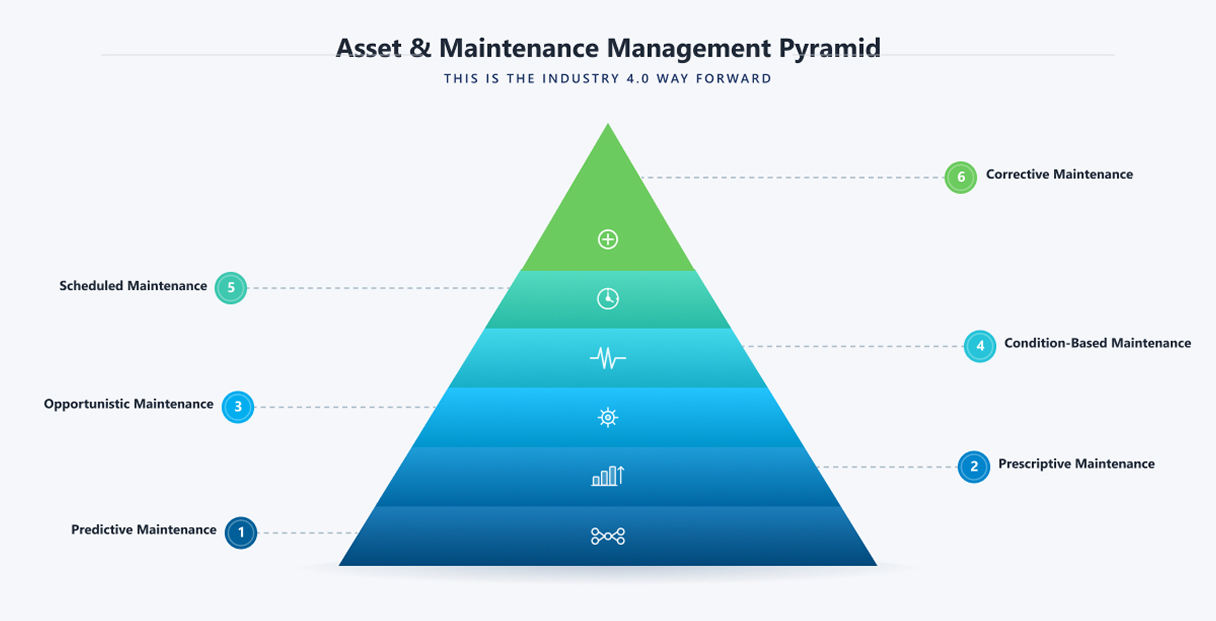
Preventive maintenance is a time-based strategy involving scheduled, routine service to prevent failure. In contrast, predictive maintenance is a condition-based approach, using real-time data and sensors to anticipate failures before they occur. The key difference in predictive vs preventive maintenance lies in the timing: preventive acts on a calendar; predictive acts on equipment health.

Definitions

To build a world-class maintenance strategy, we must first strip away the confusion between the two most common methodologies in the Indian industrial sector.

Preventive Maintenance (Time-Based)

Preventive maintenance (PM) is a defensive, scheduled strategy. It is based on the philosophy that equipment will eventually fail, so we must perform routine maintenance tasks, such as lubrication, part replacement, or adjustments at set intervals (e.g., every 500 operating hours or every six months).

  • The Philosophy: “If we service it regularly, it won’t break.”
  • The Reality: While it reduces the frequency of breakdown, it is prone to two major flaws: “Over-maintenance,” where perfectly functional parts are replaced, wasting capital; and “Infant Mortality,” where unnecessary human intervention introduces new failure points (contamination during a filter change, for instance).

Predictive Maintenance (Condition-Based)

Predictive maintenance (PdM) is an offensive, data-driven strategy. It relies on the actual state of the equipment rather than a calendar. By using sensors and diagnostic tools to monitor health parameters like vibration, temperature, and oil chemistry, maintenance is triggered only when the asset shows the first “symptom” of impending failure.

  • The Philosophy: “Don’t fix what isn’t broken; fix what is about to break.”
  • The Reality: PdM requires a higher upfront investment in technology and staff training. However, it provides a precise “maintenance window,” ensuring interventions happen exactly when needed, no sooner, no later.

Choosing the right path requires understanding the trade-offs. The following table compares predictive vs preventive maintenance across key performance indicators relevant to plant operations.

Criteria Preventive Maintenance Predictive Maintenance
Approach Time-based (Calendar/Usage Condition-based (Data-driven)
Cost Lower upfront, higher waste Higher upfront, lower long-term
Downtime Scheduled, but frequent Minimal; interventions are targeted
Data Requirements Basic logs Advanced sensors/IoT/analytics
Scalability Easy to implement Requires digital infrastructure
Risk of Failure Moderate (cannot predict random failure) Low (detects early warning signs)

Cost & ROI Comparison

For a Plant Head in the competitive Indian manufacturing landscape, maintenance is often misclassified as a “cost center.” To reframe this, we must look at the Total Cost of Ownership (TCO).

The Preventive “Trap”
Many facilities believe preventive maintenance is cheaper because the upfront investment is low. However, this ignores the “hidden costs”:

  • Wasted Parts: Replacing a motor bearing that still has 30% of its useful life left.
  • Production Interruption: Stopping a line for a “routine” check that wasn’t actually necessary.
  • Emergency Overtime: PM cannot catch random failures (e.g., sudden electrical shorts), so you still end up paying for high-cost reactive repairs anyway.

The Predictive Advantage
Predictive maintenance is the lever that moves a facility from “Firefighting” to “Engineering.”

  • Breakdown Reduction: Industry data consistently shows that predictive maintenance reduces breakdowns by 30–50%.
  • Cost Efficiency: Maintenance costs drop by 25% with condition-based strategies because you stop spending money on unnecessary service and instead focus your budget on critical repairs.

The ROI Logic:

The trade-off is simple: PM trades uptime for simplicity. PdM trades complexity for reliability. Over a 3-year horizon, the PdM model almost always yields a higher ROI because it eliminates the “Maintenance Death Spiral”, where poor maintenance leads to failures, which leads to more emergency repairs, which leads to more maintenance budget exhaustion.

Use Cases (Manufacturing, Oil & Gas)

The debate of predictive vs preventive maintenance isn’t about which is “better”, it’s about which is appropriate for asset criticality.

Manufacturing Plant (High-Volume Production)

In a high-speed packaging plant, you likely have two tiers of equipment:

  • Non-Critical (Preventive): Conveyor belts, basic lighting, or standard shop-floor fans. Here, preventive maintenance is sufficient. The cost of a failure is low, so investing in expensive vibration sensors is unnecessary.
  • Critical (Predictive): The main high-speed bottling line or the centralized air compressor. If these stop, the factory stops. Here, predictive maintenance is mandatory. Using thermal imaging to detect a struggling motor long before it smokes the entire line saves millions in lost throughput.

Oil & Gas Operations (High-Risk, High-Cost)

In the O&G sector, the cost of failure isn’t just money, it’s safety and environmental liability.

  • Preventive: Useful for routine valve testing or basic fire suppression systems.
  • Predictive: Absolutely critical for pipelines, rotating turbines, and large-scale pumping stations. In India’s humid and high-temperature environments, corrosion and bearing fatigue are silent killers. Predictive monitoring (specifically oil analysis and ultrasonic testing) acts as an early warning system, allowing teams to isolate segments before a catastrophic leak occurs.

How Hofincons Uses Predictive Analytics

At Hofincons, we don’t just sell software; we engineer reliability. Our methodology bridges the gap between raw data and actionable maintenance outcomes. We treat reliability not as a task, but as a “control tower” operation for your facility.

Our Reliability Implementation Stack:

  1. Baseline Audit: We assess your current maintenance maturity. We identify which assets deserve a predictive strategy (criticality analysis) and which are fine with a standard preventive schedule.
  2. Condition Monitoring Implementation: We deploy the right sensors for your environment, whether it is vibration analysis for rotating equipment, thermography for electrical distribution, or ultrasound for leak detection.
  3. Predictive Analytics Models: Our team interprets the data. We don’t just alert you to an anomaly; we provide a failure forecast (e.g., “The motor shows signs of insulation breakdown; expect failure in 14 days”).
  4. CMMS/EAM Integration: We close the loop. Every predictive alert is automatically fed into your CMMS (Computerized Maintenance Management System), generating an actionable work order for your team.

This “Tech + Touch” methodology, combining cutting-edge sensor data with expert reliability engineering ensures that your maintenance team spends their time solving problems, not just chasing them.
FAQ

What is predictive maintenance?

Predictive maintenance is a strategy that monitors the condition of assets in real-time to predict when they will fail. It uses technologies like vibration analysis and thermal imaging to allow maintenance to be performed only when necessary, just before a failure occurs.

Preventive maintenance is time-based (e.g., service every 3 months), while predictive maintenance is condition-based (e.g., service only when sensors detect a change in performance). Preventive is about adherence to a schedule; predictive is about reacting to asset health data.

Neither is universally “better.” The most effective maintenance strategy is a hybrid: use Preventive Maintenance for low-risk, low-cost assets, and switch to Predictive Maintenance for high-criticality assets where downtime results in significant production or safety losses.

The Reliability Balance

The debate between predictive and preventive maintenance is a false choice. True operational excellence requires a hybrid strategy: utilize preventive maintenance for routine, non-critical assets, and leverage predictive analytics for mission-critical machinery to maximize ROI.

At Hofincons, we turn maintenance data into actionable uptime intelligence. Stop firefighting and start forecasting. Let us help you engineer a reliable, high-performance future for your facility.

We use analytics and essential cookies to run the website and understand how visitors interact with it. By continuing, you agree to our use of cookies.